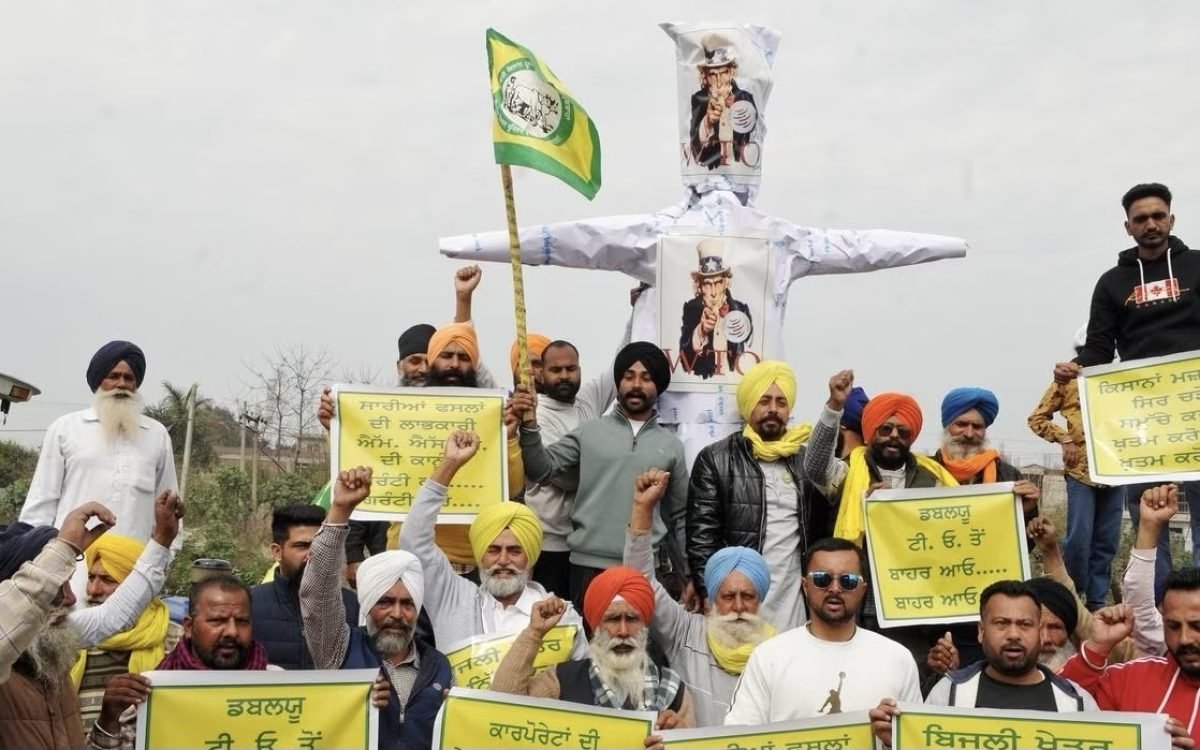
In defiance of the ongoing standoff between the Indian government and protesting farmers, February 26 marked a significant escalation with farmers across Punjab and Haryana staging tractor marches and demonstrations along State and National Highways. Undeterred by challenges, farmers voiced their demands, echoing the sentiments of various farmer organizations and condemning the suppression of their movement.
The Samyukta Kisan Morcha (SKM), a coalition spearheading the 2020-21 farmers’ agitation, designated February 26 as ‘Quit WTO Day’. In a resolute statement, the SKM accused the Central government of orchestrating severe repression against Punjab’s farmers, allegedly for political gain in other parts of the country.
Since February 13, farmers have maintained their presence at Shambhu-Ambala and Khanauri-Jind, demarcating the inter-State boundary between Haryana and Punjab, following restrictions preventing their entry into Haryana. Backed by the Kisan Mazdoor Morcha and the Samyukta Kisan Morcha (Non-Political), encompassing approximately 200 farmers and farm laborer unions, they rallied for the ‘Delhi Chalo’ march, advocating for demands including a statutory guarantee for crop procurement at Minimum Support Price (MSP) and agrarian debt relief.
In solidarity against the use of force, farmers nationwide lined their tractors along roads in protest. The SKM announced plans for a ‘Kisan Mazdoor Mahapanchayat’ on March 14 at Ramlila ground, New Delhi, intensifying their struggle for rights and dignity.
Demanding the exclusion of the agriculture sector from the World Trade Organization (WTO) agreement, farmers associated with the SKM (Non-Political) and the Kisan Mazdoor Morcha strategically positioned their tractors along State and National Highways in Punjab and Haryana.
The unwavering determination of farmers underscores their enduring spirit in adversity. Their collective voice resonates beyond agriculture, speaking to broader issues of social justice and economic equity. As they persist in their rightful demands, the farmers’ movement emerges as a powerful symbol of grassroots mobilization and solidarity, reshaping the narrative towards a more inclusive and just society.