
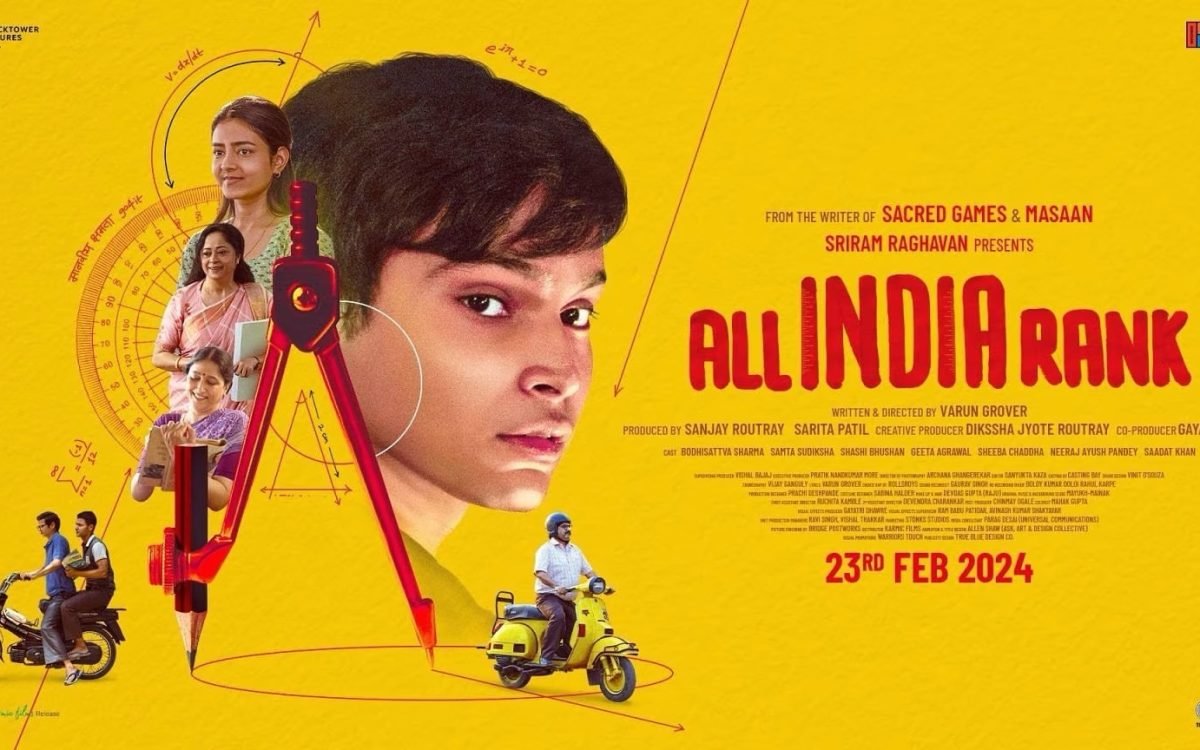
Varun Grover’s directorial debut, “All India Rank,” offers viewers a captivating journey back to the 1990s, where the era’s cultural nuances and the looming shadow of IIT entrance exams shape the narrative canvas. With meticulous attention to detail and a semi-autobiographical touch, Grover crafts a film that resonates with the nostalgia of a bygone era while delving into the complexities of adolescent aspirations and parental pressures.
Set against the backdrop of Kota, the ‘Haridwar of coaching,’ the film follows the journey of Vivek, portrayed by Bodhisattva Sharma, as he navigates the labyrinthine world of competitive exams and hostel life. Grover’s portrayal captures the essence of the late 1990s, where cassettes, Walkmans, and PCOs were ubiquitous symbols of a simpler yet challenging time.
In an exclusive interview with ThePrint, Grover reflects on his motivation to create a film that encapsulates the nostalgia he felt for the ’90s. With a commitment to authenticity, he endeavors to capture the essence of the era, weaving together a tapestry of pop culture references, mathematical formulas scrawled on walls, and the palpable sense of anxiety and restlessness that defined the period.
The film’s languid pace and attention to detail evoke a sense of immersion in the post-liberalization era, where optimism and uncertainty coexist. Through vivid graphics, doodles, and music, Grover invites viewers to experience the zeitgeist of a transformative decade that laid the groundwork for the emergence of the new middle class and the success industry.
Grover’s exploration of the ’90s resonates with contemporary audiences, offering a window into the formative years that shaped modern India. Filmmaker duo Raj Nidimoru and Krishna DK, along with other creators, also delve into the nostalgia of the era, infusing their works with iconic imagery and cultural references that evoke a sense of familiarity and longing.
In a landscape where nostalgia serves as a powerful storytelling tool, films like “All India Rank” and “Dum Laga Ke Haisha” transport viewers on a sentimental journey, celebrating the quirks and idiosyncrasies of a bygone era. Through nuanced narratives and evocative storytelling, these films bridge the gap between past and present, inviting audiences to reminisce and reflect on the timeless allure of nostalgia.
As “All India Rank” unfolds, it invites viewers to embrace the nostalgia of the 1990s while grappling with the universal themes of ambition, identity, and belonging. In capturing the spirit of an era defined by change and uncertainty, Grover’s directorial debut leaves an indelible mark on the cinematic landscape, offering a poignant reminder of the enduring power of storytelling to transcend time and space.