
December 29, 2025

Silver Crashes After Record High as Profit Booking and Margin Hike Trigger Sharp Selloff

Silver prices saw a sharp and sudden reversal on Monday, crashing after hitting record highs earlier in the session. The fall was driven by aggressive profit booking, easing geopolitical tensions, and tighter trading conditions imposed by global exchanges. MCX Silver Slides ₹21,000 in One Hour On the Indian commodity market, March silver futures plunged by nearly ₹21,000 per kg, crashing to an intraday low of ₹2,33,120 per kg within just an hour during afternoon trade. The selloff followed a powerful rally that had pushed prices to an all-time high of ₹2,54,174 per kg earlier in the day. Once prices reached extreme levels, traders moved quickly to lock in profits, triggering a rapid and heavy decline. Global Silver Retreats After Breaching $80 In international markets, silver briefly surged above the $80 per ounce mark for the first time amid highly volatile trading. However, the rally proved short-lived, with prices later slipping below $75 per ounce as profit-taking intensified. Market sentiment cooled after reports of progress in peace discussions between the US and Ukraine. Comments suggesting that negotiations were moving closer to a potential agreement reduced immediate safe-haven demand, prompting investors to cut exposure to precious metals. Broad Profit Booking Across the Bullion Complex The decline in silver was part of a broader selloff across the bullion complex, as easing geopolitical risk reduced the appeal of defensive assets. Gold and other precious metals also witnessed profit booking during the session. Silver’s sharp fall was amplified by its 181% year-to-date rally, which had significantly outperformed gold. Such steep gains left prices vulnerable to abrupt corrections once sentiment shifted. Margin Hike Adds to Selling Pressure Adding to the pressure was a margin hike by a major global derivatives exchange. With effect from Monday, the initial margin requirement for March 2026 silver futures was raised to around $25,000, up from $20,000 earlier this month. Higher margin requirements force traders to deploy more capital per contract, often leading to liquidation of leveraged positions—especially after steep price rallies. Warning Signs After a Parabolic Run Market analysts warned that precious metals had entered a parabolic phase, cautioning that such moves rarely correct gradually. “Parabolic rallies typically end with sharp downside reactions rather than slow consolidation,” analysts noted, highlighting the risk of further volatility. Why Silver Had Rallied So Strongly Before the crash, silver prices had surged on the back of: Its designation as a critical mineral in the US Tight global supply and constrained mine output Low inventories Rising industrial demand, particularly from clean energy and electronics Strong investment inflows driven by geopolitical uncertainty Monday’s sharp move, however, underscored how quickly momentum-driven markets can reverse. Outlook: Volatility Likely to Persist With geopolitical tensions easing and trading costs rising, silver is likely to remain volatile in the near term. Further correction or consolidation cannot be ruled out. At the same time, any renewed global uncertainty or supply disruption could quickly revive safe-haven demand. For now, the message from the market is clear: After a parabolic rally, silver has entered a reset phase—where sharp swings, not steady gains, define the trend.

Silver Crashes After Record High as Profit Booking and Margin Hike Trigger Sharp Selloff Read More »
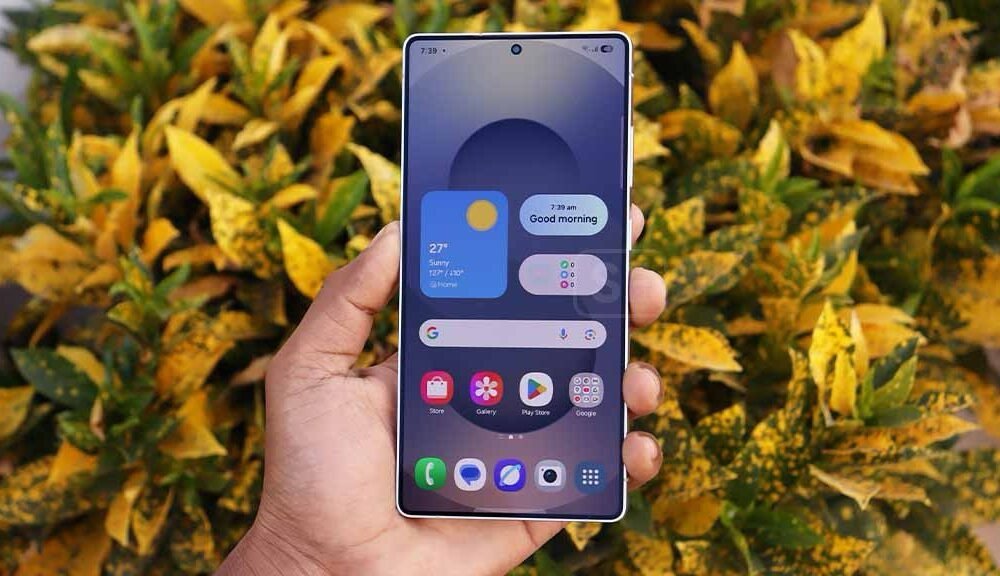
Samsung’s 2026 Crossroads: Galaxy S26 Price Pressure, Exynos Revival, Foldables, and CES Ambitions

As 2025 comes to an end, Samsung is lining up a high-stakes start to 2026. CES in Las Vegas will set the tone, followed closely by the launch cycle of the Galaxy S26 series. On the surface, it looks like another confident flagship year. Underneath, Samsung is dealing with serious pressure—from rising component costs to semiconductor strategy shifts that directly affect smartphone pricing. This is not a hype problem. It’s a margin problem. Table of Contents Galaxy S26 Series: Price Complications Exynos Modem and In-House GPU Push WideFold and TriFold Strategy One UI 8.5 Global Expansion HBM4 and Semiconductor Momentum CES 2026 Outlook Galaxy S26 Series: Price Complications The Galaxy S-series remains the most successful premium Android lineup globally. Performance and features aren’t the issue—pricing is. Reports suggest Samsung has not yet finalized pricing for the Galaxy S26 series, expected to include Standard, Pro, and Ultra variants. The delay is being driven by escalating supply-chain costs that are becoming harder to absorb year over year. What’s Driving Prices Up? 1. Memory costs The AI boom has reshaped the semiconductor industry. Manufacturers are shifting production from conventional DDR and LPDDR memory toward high-margin HBM (High Bandwidth Memory) used in AI accelerators. The result is lower availability for smartphone memory and a sharp price increase. Analysts expect 30–40% higher memory prices heading into 2026. 2. OLED displays and camera modules Advanced OLED panels and increasingly complex camera systems continue to rise in cost, especially with higher brightness targets and larger sensors becoming standard. 3. Snapdragon dependency Qualcomm’s flagship chips remain one of the most expensive components in Samsung’s bill of materials, particularly in regions where Snapdragon versions are mandatory. Samsung is stuck between two bad options: Raise prices and risk demand slowdown Hold prices and take a margin hit Current Price Context The Galaxy S25 lineup launched at: Standard: $799.99 Plus: $999.99 Ultra: $1,299.99 These prices were unchanged from the S24 series, even though the Ultra had already increased by $100 compared to the S23 Ultra. Repeating a similar increase with the S26 could push consumer tolerance to its limit. Screen Size Shake-Up? An unconfirmed rumor suggests Samsung may increase the Plus model’s display size to nearly match the Ultra. Currently, the Plus sits at 6.7 inches, while the Ultra reaches 6.9 inches. If true, this would blur product segmentation and potentially justify pricing adjustments—but for now, it remains speculation. Exynos Modem and In-House GPU: A Strategic Reset To regain cost control, Samsung is pushing hard to revive its in-house silicon strategy. Next-generation Exynos chips paired with an internally developed GPU are central to this plan. The goal is clear: Reduce reliance on third-party chipmakers Improve long-term margins Gain tighter hardware-software integration That said, Samsung is expected to continue using Snapdragon chips in key markets for the Galaxy S26 series. User perception and real-world performance will ultimately decide how quickly Exynos regains wider adoption. WideFold and TriFold: Expanding Beyond the Slab Samsung isn’t relying solely on traditional smartphones for growth. WideFold is aimed at productivity users who want a broader folding display. TriFold experiments with multi-hinge designs that could redefine portability and multitasking. These concepts strengthen Samsung’s lead in foldables, especially as competitors remain cautious. The challenge is scalability—foldables must move beyond niche pricing to drive meaningful volume. One UI 8.5: Wider Global Reach Samsung is also leaning into software differentiation. The One UI 8.5 beta is expanding to more regions, signaling faster rollouts and stronger global parity. As hardware prices rise, long-term software support, stability, and AI-driven features are becoming key decision factors for buyers. HBM4 and Semiconductor Momentum Samsung’s semiconductor division is entering 2026 with strong momentum, driven by new HBM4 deals tied to AI infrastructure growth. From a business perspective, this is a win. From a smartphone perspective, it’s a double-edged sword. The same shift that boosts semiconductor profits is tightening memory supply for consumer devices, directly contributing to higher phone production costs. CES 2026: Setting the Narrative At CES 2026, Samsung is expected to showcase: New consumer electronics Foldable innovations AI-driven hardware and semiconductor progress CES will define the story—but Galaxy S26 pricing will define the outcome. The Reality Check Samsung is not short on innovation. The problem is alignment. Costs are rising faster than consumer willingness to pay Exynos must prove itself again Foldables need scale, not just novelty Semiconductor success is pressuring smartphone margins The Galaxy S26 series could be one of Samsung’s most refined flagships yet—but pricing will decide whether 2026 is about growth or damage control. This isn’t a technology challenge anymore. It’s a business one.

Samsung’s 2026 Crossroads: Galaxy S26 Price Pressure, Exynos Revival, Foldables, and CES Ambitions Read More »

U.S. Offers Ukraine 15-Year Security Guarantees Under Proposed Peace Plan, Zelenskyy Says

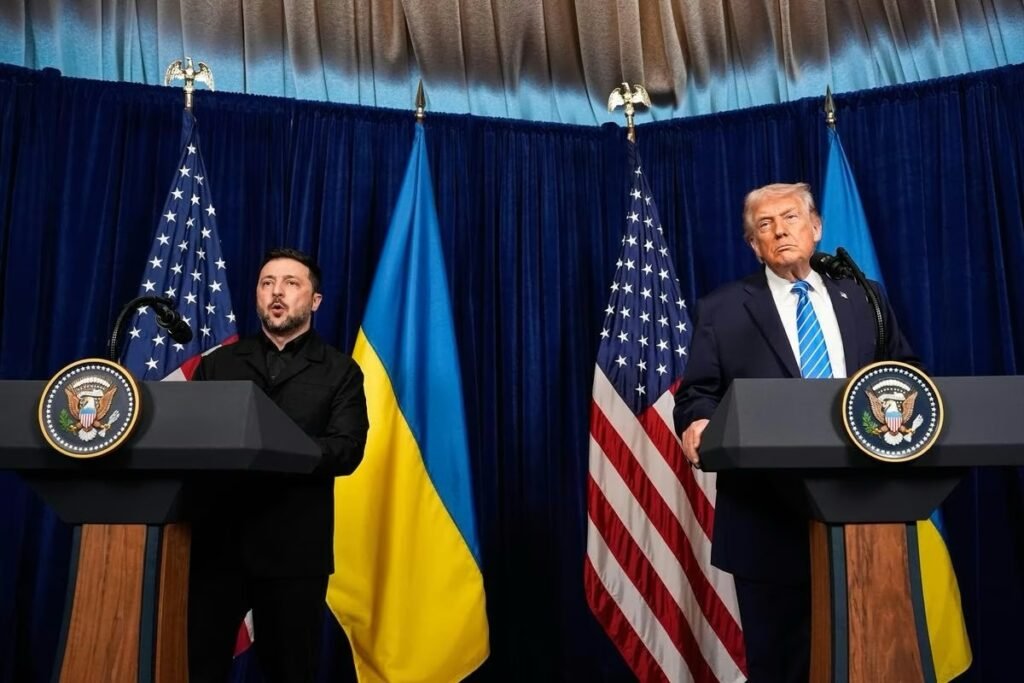
The United States has proposed providing Ukraine with security guarantees for a period of 15 years as part of a broader peace plan aimed at ending the war with Russia, Ukrainian President Volodymyr Zelenskyy said on Monday. However, Zelenskyy indicated that Kyiv would prefer a much longer commitment—up to 50 years—to ensure lasting deterrence against future Russian aggression. Zelenskyy’s comments followed a meeting with U.S. President Donald Trump, who hosted the Ukrainian leader at his Florida resort on Sunday. After the talks, Trump said Ukraine and Russia were “closer than ever before” to reaching a peace settlement, though he did not disclose specific details of the proposal or a timeline for an agreement. Speaking through voice messages sent to reporters via WhatsApp, Zelenskyy stressed that binding security guarantees were a prerequisite for ending the conflict. “Without security guarantees, realistically, this war will not end,” he said, reflecting Kyiv’s long-standing concern that any agreement without enforcement mechanisms would leave the country exposed to renewed military pressure from Moscow. Ukraine has been in conflict with Russia since 2014, when Moscow illegally annexed Crimea and supported separatist forces in the eastern Donbas region. What began as a regional conflict later escalated into a full-scale war, reshaping European security and triggering the largest military confrontation on the continent since World War II. The fighting has killed tens of thousands, displaced millions, and caused extensive damage to Ukraine’s infrastructure and economy. Details of the proposed U.S. security guarantees have not been made public. Zelenskyy said the package under discussion includes provisions for monitoring a peace agreement and the “presence” of international partners to ensure compliance. He did not clarify whether this presence would involve military forces, peacekeepers, or other forms of oversight. Russia has consistently opposed the deployment of troops from NATO countries in Ukraine, arguing that such a move would pose a direct threat to its national security. Moscow has repeatedly cited NATO’s involvement and expansion as a core grievance, a claim rejected by Kyiv and Western governments, which say Ukraine has the sovereign right to determine its own security arrangements. On Monday, Kremlin spokesman Dmitry Peskov said Russian President Vladimir Putin and Trump were expected to speak in the near future. However, there was no indication that Putin would engage in direct talks with Zelenskyy, highlighting the persistent diplomatic gap between Moscow and Kyiv despite renewed international efforts to broker a settlement. European leaders are also stepping up involvement in the diplomatic process. French President Emmanuel Macron said Ukraine’s allies would meet in Paris in early January to “finalise each country’s concrete contributions” toward the proposed security guarantees. France has been among the European nations advocating a coordinated approach that combines long-term security commitments with diplomatic engagement. According to Zelenskyy, Trump indicated during their meeting that Washington could consider extending security guarantees beyond the initial 15-year period. Any such commitment, he said, would require approval from the U.S. Congress, as well as ratification by the parliaments of other countries participating in overseeing a potential settlement. The Ukrainian president has also emphasized the importance of domestic legitimacy. He said he wants the proposed 20-point peace plan to be approved by Ukrainians through a national referendum, arguing that the scale and long-term consequences of the agreement require direct public consent. However, holding such a vote would face legal and practical hurdles. Ukrainian law requires a ceasefire of at least 60 days before a nationwide referendum can be conducted. So far, Russia has shown no willingness to agree to even a temporary truce without a comprehensive settlement in place, complicating Kyiv’s plans for public approval. Analysts say the duration and enforceability of security guarantees are likely to be among the most contentious elements of any agreement. Ukrainian officials have frequently pointed to past assurances, including those given after Ukraine gave up its nuclear arsenal in the 1990s, arguing that they failed to prevent Russian aggression. As a result, Kyiv is seeking guarantees that are not only long-term but also backed by clear mechanisms for enforcement. For Washington, the proposal reflects a balancing act between deterring further Russian advances and avoiding open-ended military commitments abroad. While Trump has expressed optimism about the prospects for peace, skepticism remains among observers who note the deep mistrust between the parties and the lack of clarity on how any guarantees would be implemented in practice. Russia, meanwhile, continues to insist that any settlement must address what it describes as its fundamental security concerns, including Ukraine’s military alignment and the status of territories currently under Russian control. Ukrainian officials have repeatedly rejected any agreement that would legitimize territorial losses or compromise the country’s sovereignty. As diplomatic efforts intensify, the coming weeks are expected to be critical. Meetings among Western allies in Paris, along with anticipated discussions between Trump and Putin, could provide further clarity on whether the proposed security guarantees can serve as the foundation for a viable peace agreement. For now, Zelenskyy’s message remains consistent: without strong, long-term security commitments backed by the United States and its partners, Ukraine believes any peace deal would be fragile—and the risk of renewed conflict would remain high.

U.S. Offers Ukraine 15-Year Security Guarantees Under Proposed Peace Plan, Zelenskyy Says Read More »

© MY CIRCLE STORY

Scroll to Top